
• Shopping Cart Shopping Cart
    0Shopping Cart
Mission Museum
  • Link to Facebook
  • Link to Instagram
  • About Us
  • Local History
  • Museum Collection
  • Events & Programs
    • Events
    • Children’s Summer Programs
    • Historic Downtown Walking Tours
    • School Programs & Educational Resources
  • Exhibits
  • Get Involved
    • Volunteer Application Form
    • Employment Opportunities
  • Donate
    • Artifact Donations
    • Financial Donations
  • Contact us
  • Click to open the search input field Click to open the search input field Search
  • Menu Menu

BERRY AND DAIRY

Mission was once known as a major producer of fruit in the Fraser Valley, with crops of rhubarb, strawberries, raspberries, blackberries, black currants, gooseberries, cherries, apples, and pears. Mission’s fruit was in high demand, and would travel far to reach its customers via rail. At the time, the process of rail shipping was unreliable as the CPR did not provide refrigerated cars, nor prioritize cars full of fruit so they could reach their destination unspoiled. The result was that produce often arrived damaged or rotten. In response, Mission farmers created the United Farmer’s Co-op, whose first initiatives were to build a storage facility, and to petition the Department of Agriculture to police the rail shipments arriving from BC to ensure that shipment damages were reported accurately. Another way to avoid the risk of food spoilage was to locally process the fruit into preserves at the King-Beach canning factory.

Highly Skilled Farmers

Highly skilled farmers were responsible for cultivating Mission’s highly desired crops. One of the biggest fruit growers in the Hatzic area was Thomas Catherwood, who sold his thirty different types of fruit through a catalogue to the prairies. Another successful Mission farmer was Bunjiro Sakon. Sakon developed cold weather resistant crops, including the hothouse rhubarb and autumn strawberry, which prolonged Mission’s overall growing season.

A major part of Mission’s successful fruit growing efforts is thanks to the hard work of Japanese-Canadian farmers who settled in the area. Prior to WWII, Mission drew a large number of Japanese immigrants due to the availability of inexpensive land. The affordable lots purchased by the farmers were typically difficult to work as they were hillside areas, but nevertheless they became some of the most skilled farmers in the area.

The efforts of the Japanese-Canadian famers were abruptly brought to an end when Pearl Harbour was bombed by Japan on December 7, 1941. Subsequently, their belongings and properties were seized by the Canadian government, and the farmers were sent to internment camps or sugar beet farms in Alberta. For more information on Japanese-Canadian internment and community see the following page: https://www.missionmuseum.com/local-history/the-lost-pioneers/

The effect on Mission’s berry industry was immediate and devastating. The confiscated farms represented 75% of Mission’s strawberry capacity, and the farming skills and dedication were unmatched. After the Japanese-Canadian farmers were forcibly removed in 1942, the crop yield fell by almost 85%.
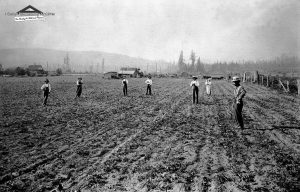
KamejiroTsuji’s5acrestrawberryfarm

Home of the Big Red Strawberry

When WWII ended in 1946, Mission’s residents were in need of a morale boost. The Mission Memorial Hospital needed renovations, and the diminished berry industry needed a kick-start, so the Board of Trade initiated the first Strawberry Festival. 75% of profits would be allocated for the hospital, and a healthy competition was presented to the berry growers for the title of Strawberry King.

While the Strawberry Festival brought civic pride and tourism to Mission, the town never reached the pre-war crop yield. The flatlands of Abbotsford were considered more suitable for expanding the Fraser Valley’s farming output, and Mission was no longer known for its strawberries. For more information on this event, please visit the following page: https://www.missionmuseum.com/local-history/home-of-the-big-red-strawberry/

Dairy Farming

Mission’s commercial dairy industry boomed in 1900-1910, in part due to the construction of better dykes along the Fraser which reduced the risk of flooding on the flatlands. The boom brought in the Western Condensed Milk, Canning, Coffee and Creamery Company who opened on the flats. They became responsible for picking up milk from farmers who lived along the Fraser River from Mission City to Nicomen Island.

A small railway called the Aggasiz Local was established in 1903, which ran from Ruby Creek (East of Aggasiz) to Vancouver. Farmers who lived farther from the banks of the Fraser used this local rail to ship their milk into town to be later processed and shipped by Western. Other farmers shipped their unprocessed milk straight to Vancouver.

This expanding area was ripe for business competition and Western was forced to close, and as a result Mission lost its dairy processing altogether. In response, dairy farmers formed the Fraser Valley Milk Producers Association in 1917, taking over companies in various sectors of the dairy industry. This eliminated private distributors, and the farmers could regain control, and the industry stabilized.

A president’s report in 1958 claimed that the FVMPA contributed $310 million to the Lower Mainland economy over its 40 years of operations. The FVMPA-run Associated Dairies (eleven Vancouver dairies amalgamated under one name) closed in 1943, but its operations continued under the name “Dairyland Fluid Milk Division” until the early 2000s, when it was taken over by Saputo. Today, the name Dairyland is still a familiar brand in grocery store refrigerators.
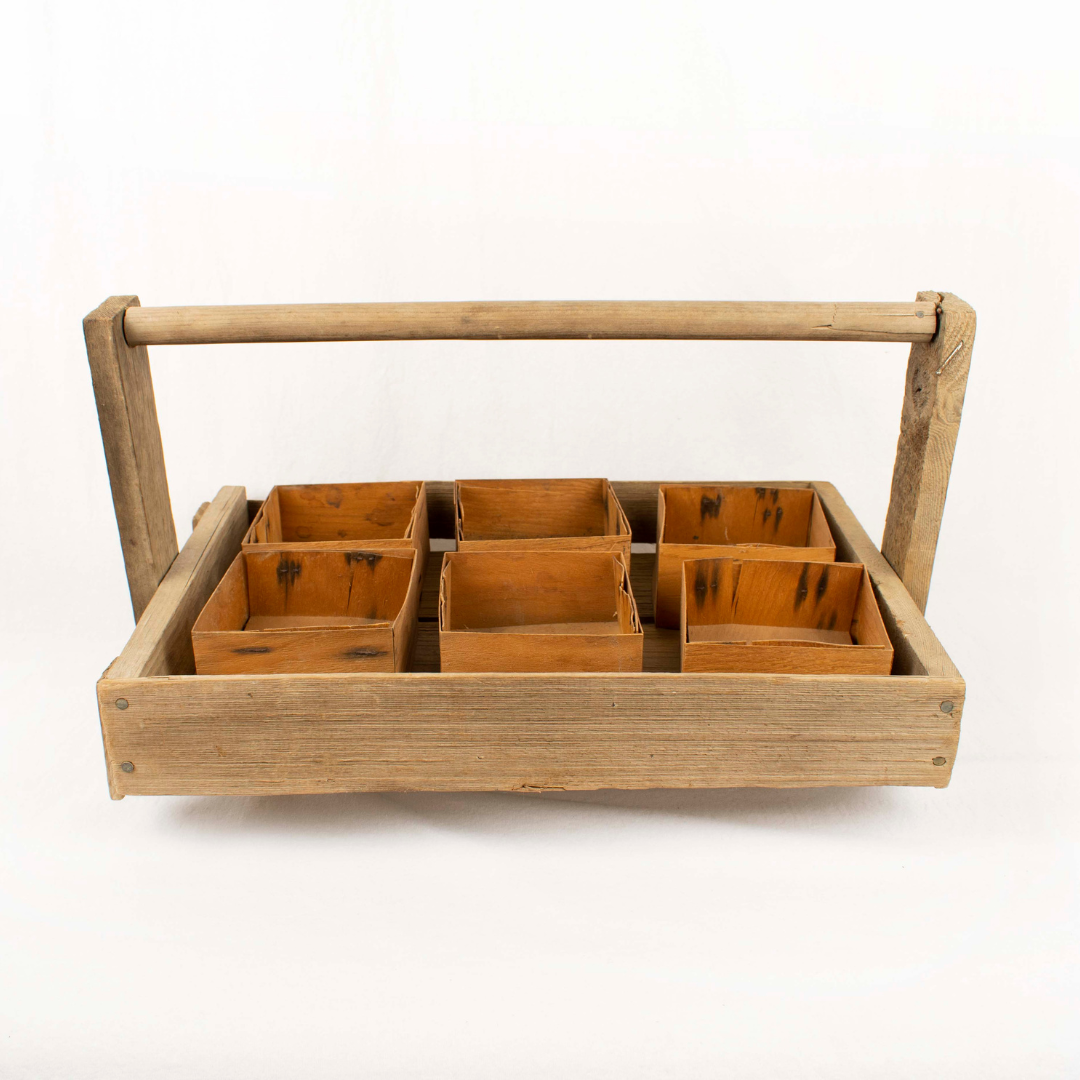
While Mission enjoyed the prosperity of its berry industry in the 1920s, a create of the area's best berries was shipped via Trans-Canada North Star to King George V each year on his birthday. 1992.001.001
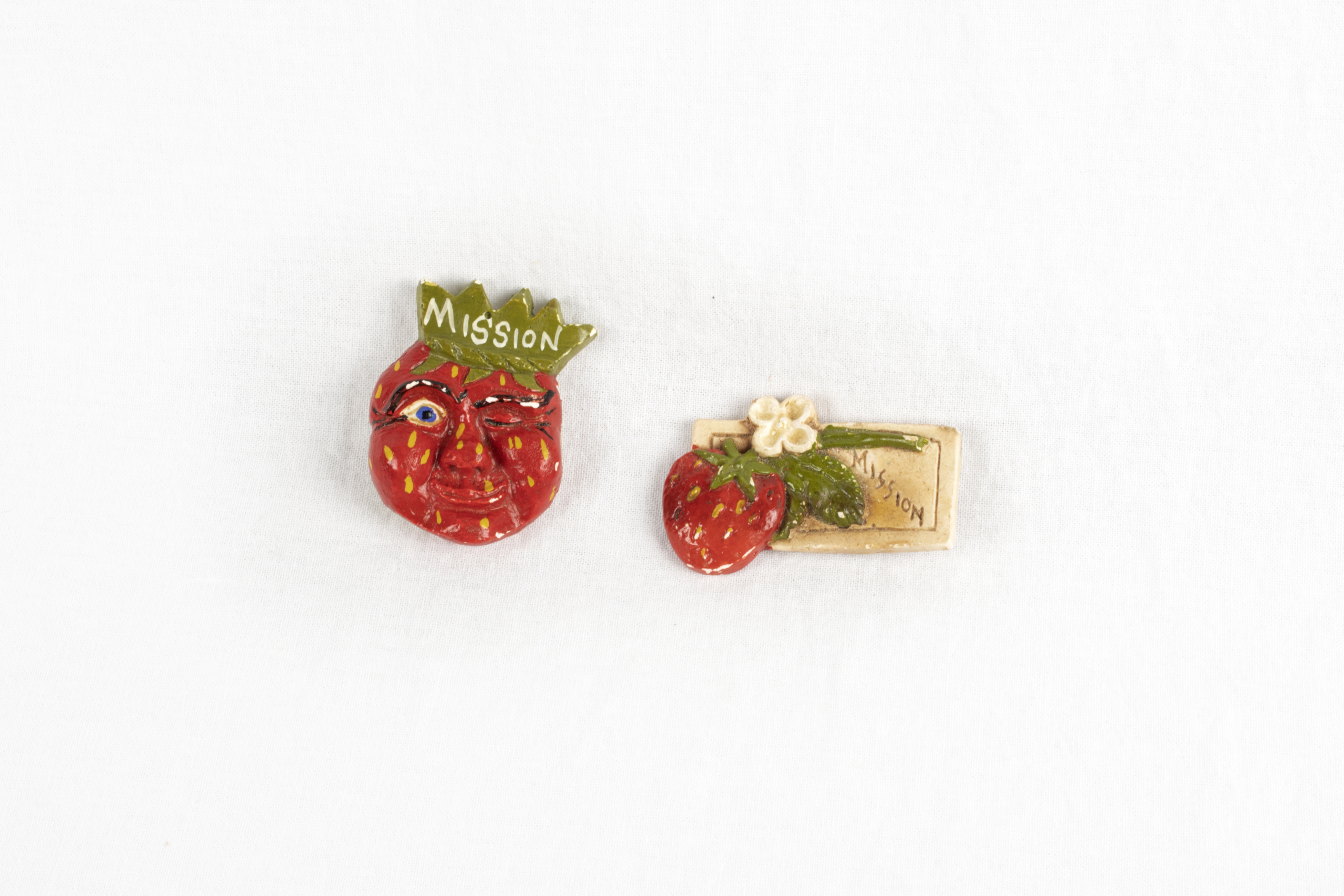
Mission’s Strawberry Festival had a competition for crowning both a Strawberry King and Queen. One of these Strawberry Festival pins is made of salt dough with the word "Mission" carved into it, and the other of plaster and metal with the leaves of the strawberry forming a crown; a literal Strawberry King. 1995.002.014, 1995.002.019;
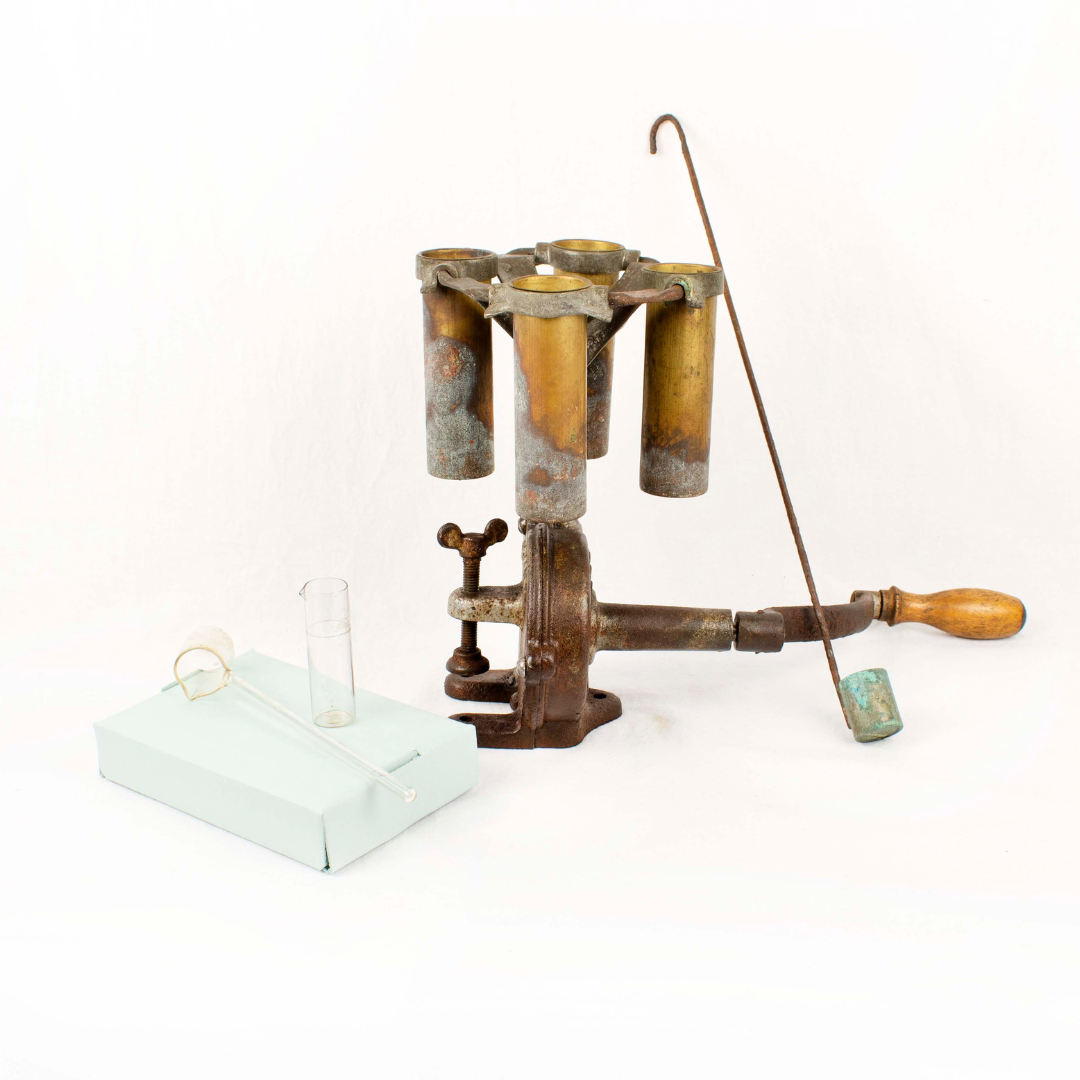
This is a babcock tester and components, used to determine to determine the fat content of milk samples. Sulfuric acid and milk are added to a Babcock bottle. Heating and centrifuging cause the fat to separate from the liquid and float to the top. These components came from the Fraser Valley Milk Producers Association. 2005.030.001
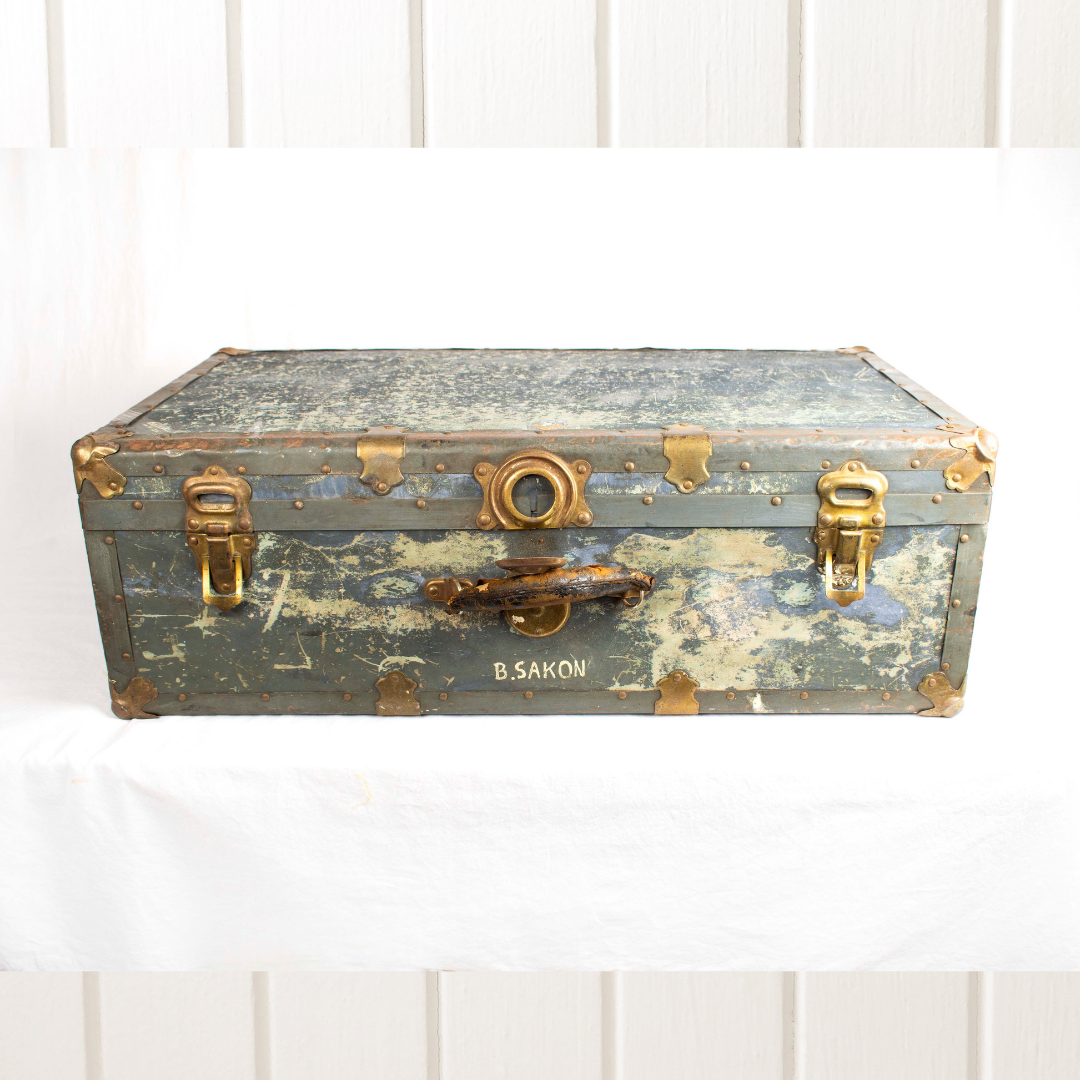
This trunk once belonged to Mission farmer, Bunjro Sakon, who was developed the hothouse rhubarb, a winter crop. On November 26, 1934, The Japan Industry Association awarded the Certificate of Meritorious Service to Sakon for his innovations.

Photographs courtesy of the Mission Community Archives.

BACK TO EXHIBIT HOMEPAGE

Get notified about museum exhibits, events and programs!

Like us on Facebook

Events Calendar

Current Month

june, 2026

Search Search

Museum Hours

REGULAR HOURS:

Saturdays
10am – 4pm

Website Privacy Statement
Indigenous Relations Policy

Museum Address

33201 2nd Avenue, PO Box 3522
Mission BC V2V 4L1
604 826 1011

info@missionmuseum.com

GENEROUSLY SUPPORTED BY

The Mission District Historical Society gratefully acknowledges financial support received from the City of Mission, the province of British Columbia and private and corporate donors.

Copyright - Mission Museum - powered by Enfold WordPress Theme
  • Link to Facebook
  • Link to Instagram
Scroll to top Scroll to top Scroll to top

This site uses cookies. By continuing to browse the site, you are agreeing to our use of cookies.

AcceptHide NotificationSettings

Cookie and Privacy Settings


How we use cookies

We may request cookies to be set on your device. We use cookies to let us know when you visit our websites, how you interact with us, to enrich your user experience, and to customize your relationship with our website.

Click on the different category headings to find out more. You can also change some of your preferences. Note that blocking some types of cookies may impact your experience on our websites and the services we are able to offer.

Essential Website Cookies

These cookies are strictly necessary to provide you with services available through our website and to use some of its features.

Because these cookies are strictly necessary to deliver the website, refusing them will have impact how our site functions. You always can block or delete cookies by changing your browser settings and force blocking all cookies on this website. But this will always prompt you to accept/refuse cookies when revisiting our site.

We fully respect if you want to refuse cookies but to avoid asking you again and again kindly allow us to store a cookie for that. You are free to opt out any time or opt in for other cookies to get a better experience. If you refuse cookies we will remove all set cookies in our domain.

We provide you with a list of stored cookies on your computer in our domain so you can check what we stored. Due to security reasons we are not able to show or modify cookies from other domains. You can check these in your browser security settings.

Google Analytics Cookies

These cookies collect information that is used either in aggregate form to help us understand how our website is being used or how effective our marketing campaigns are, or to help us customize our website and application for you in order to enhance your experience.

If you do not want that we track your visit to our site you can disable tracking in your browser here:

Other external services

We also use different external services like Google Webfonts, Google Maps, and external Video providers. Since these providers may collect personal data like your IP address we allow you to block them here. Please be aware that this might heavily reduce the functionality and appearance of our site. Changes will take effect once you reload the page.

Google Webfont Settings:

Google Map Settings:

Google reCaptcha Settings:

Vimeo and Youtube video embeds:

Other cookies

The following cookies are also needed - You can choose if you want to allow them:

Privacy Policy

You can read about our cookies and privacy settings in detail on our Privacy Policy Page.

Website Privacy Statement
AcceptHide Notification
X